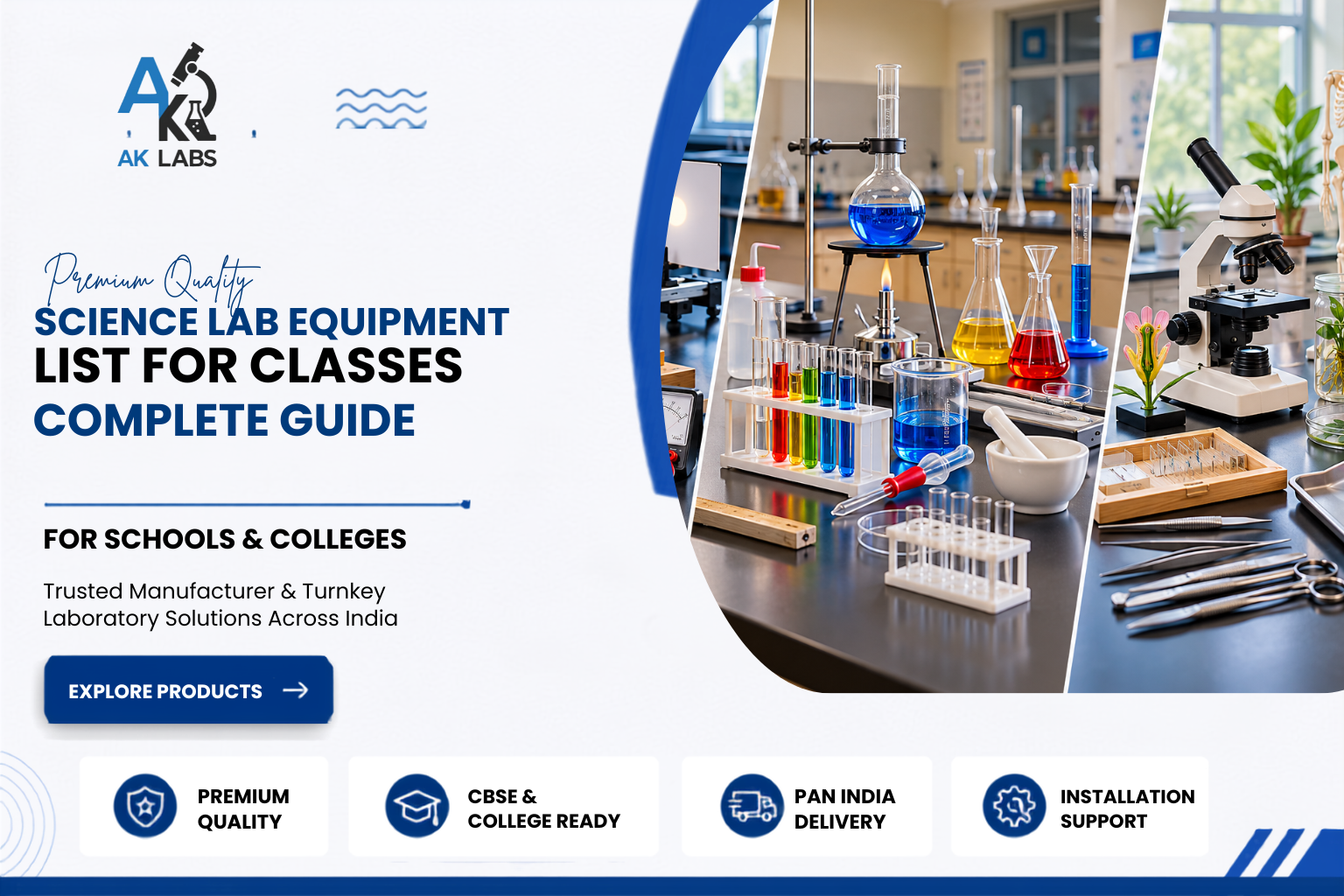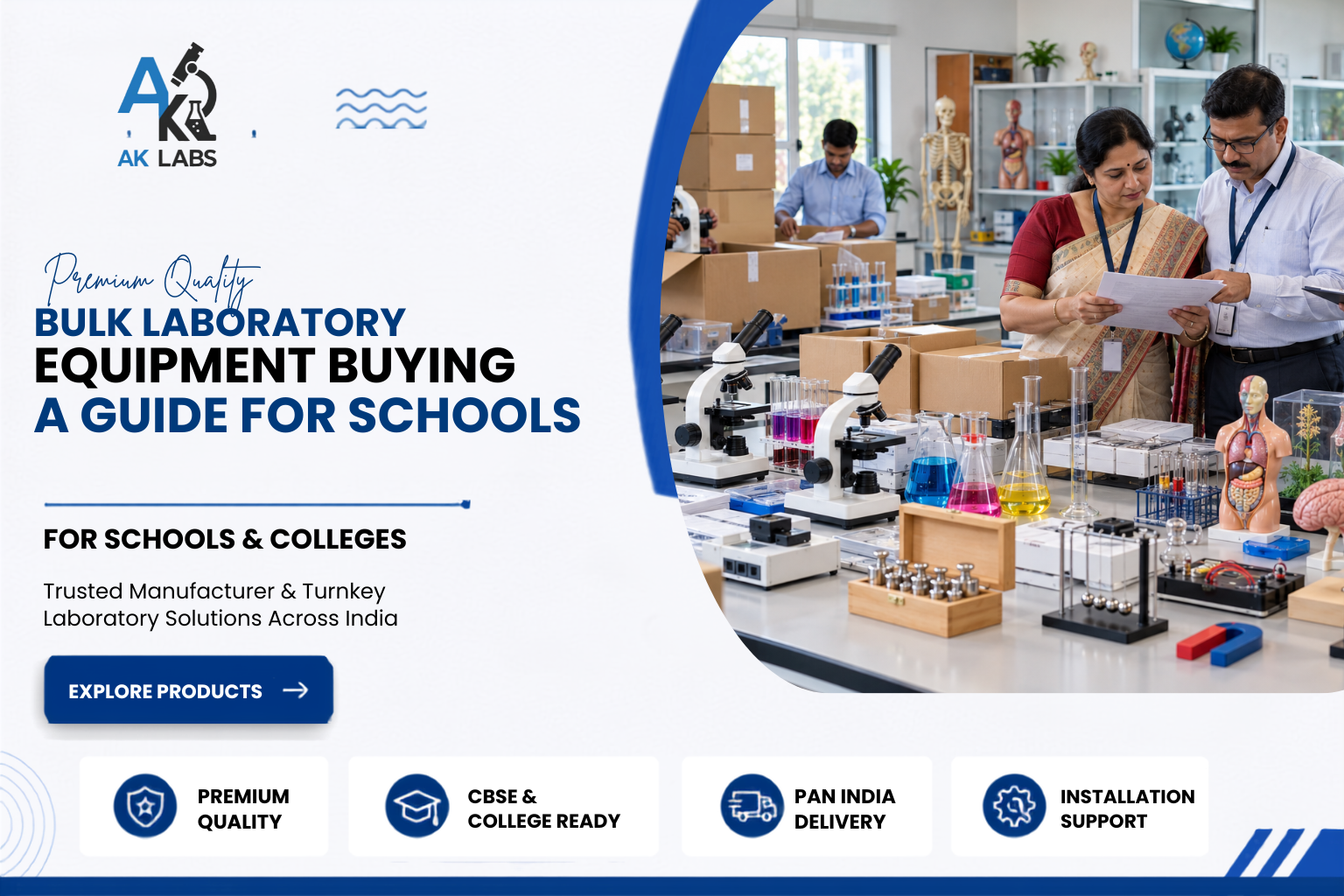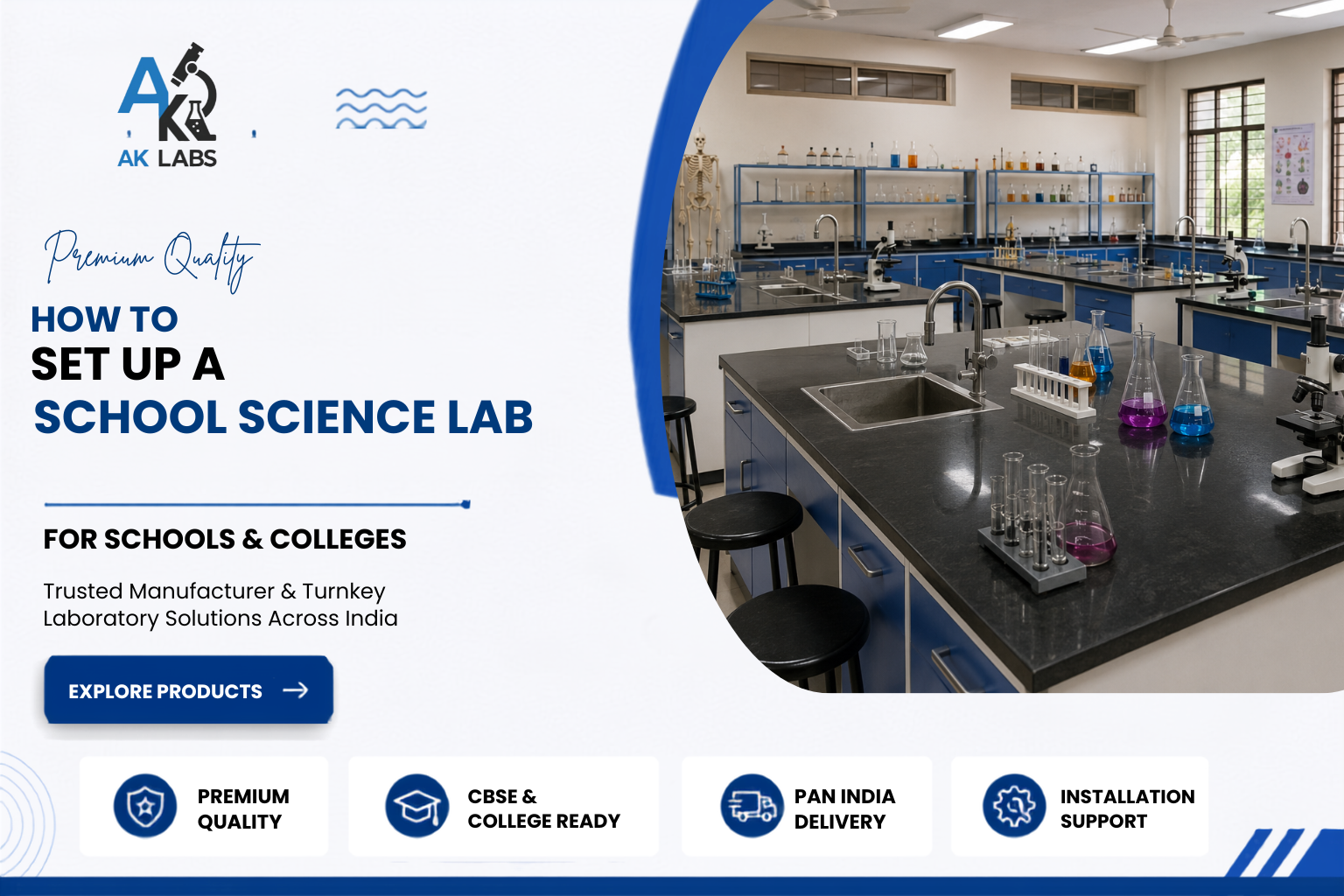
Learn how to set up a safe, well-equipped, and effective school science laboratory. This complete guide covers laboratory planning, furniture, equipment, safety, storage, budgeting, and essential requirements for Physics, Chemistry, and Biology labs.
A well-designed science laboratory is an essential part of modern school education. Practical experiments help students understand scientific concepts, develop observation skills, and learn through hands-on activities.
Setting up a school science lab requires more than simply purchasing laboratory equipment. Proper planning, suitable furniture, safety arrangements, storage facilities, and the right scientific instruments are all important for creating an effective learning environment.
In this guide, we explain how to set up a school science lab, from planning and equipment selection to safety and maintenance.
Why Is a Science Lab Important in Schools?
Science is best understood through both theory and practical experience. A properly equipped laboratory allows students to perform experiments, observe scientific phenomena, and develop practical skills.
A school science laboratory can help students:
- Understand scientific concepts through practical experiments
- Develop observation and analytical skills
- Learn how to use scientific instruments
- Improve problem-solving abilities
- Develop safe laboratory practices
- Gain confidence through hands-on learning
- Connect classroom theory with real-world applications
Step 1: Plan the Laboratory Requirements
The first step is to determine what type of laboratory the school needs.
Depending on the classes and curriculum, a school may require:
- General Science Laboratory
- Physics Laboratory
- Chemistry Laboratory
- Biology Laboratory
- STEM Laboratory
- Mathematics Laboratory
- Composite Science Laboratory
Before purchasing equipment, prepare a detailed list based on the curriculum, number of students, experiments, available space, and school requirements.
Step 2: Select a Suitable Laboratory Space
The laboratory should have enough space for students to move comfortably and perform experiments safely.
Consider the following while selecting the room:
- Adequate floor area
- Proper ventilation
- Good lighting
- Easy access to water
- Suitable electrical connections
- Safe entry and exit
- Proper storage space
- Adequate working areas
- Emergency access
The laboratory layout should allow teachers to supervise students easily during practical activities.
Step 3: Choose Appropriate Laboratory Furniture
Laboratory furniture should be strong, durable, easy to clean, and suitable for practical activities.
Important laboratory furniture may include:
- Student laboratory work benches
- Teacher demonstration table
- Laboratory stools
- Storage cabinets
- Chemical storage cabinets
- Reagent shelves
- Sink units
- Equipment storage racks
- Display boards
The furniture should be arranged so that students have sufficient working space and clear movement pathways.
Step 4: Arrange Water and Electrical Facilities
Many laboratory experiments require water and electricity.
The laboratory should have appropriate:
- Water supply
- Laboratory sinks
- Drainage facilities
- Electrical sockets
- Proper wiring
- Suitable lighting
- Circuit protection
Electrical equipment should be installed safely and checked regularly.
Step 5: Select Essential Science Lab Equipment
Choosing the right equipment is one of the most important steps when setting up a school science laboratory.
The equipment required will depend on the subjects and classes being taught.
General Science Equipment
Common equipment includes:
- Beakers
- Test tubes
- Measuring cylinders
- Conical flasks
- Funnels
- Droppers
- Thermometers
- Laboratory balances
- Tripod stands
- Wire gauzes
- Test tube stands
- Glass rods
- Laboratory tongs
Physics Lab Equipment
A Physics laboratory may require:
- Vernier calipers
- Screw gauges
- Meter scales
- Spring balances
- Stopwatches
- Ammeter
- Voltmeter
- Galvanometer
- Rheostat
- Resistance boxes
- Magnets
- Optics equipment
- Mechanics apparatus
- Electricity and magnetism experiment setups
Chemistry Lab Equipment
Chemistry laboratories may require:
- Beakers
- Test tubes
- Conical flasks
- Volumetric flasks
- Pipettes
- Burettes
- Measuring cylinders
- Funnels
- Crucibles
- Evaporating dishes
- Tripod stands
- Chemical storage containers
- Laboratory balances
Biology Lab Equipment
Biology laboratories commonly require:
- Compound microscopes
- Prepared slides
- Specimen jars
- Dissection trays
- Forceps
- Dissection instruments
- Hand lenses
- Biology models
- Charts
- Specimens
- Glassware
Step 6: Provide Proper Storage Facilities
Proper storage is essential for keeping laboratory equipment organized and protected.
Separate storage areas can be created for:
- Glassware
- Instruments
- Chemicals
- Biology specimens
- Models
- Electrical equipment
- STEM kits
- Cleaning materials
Chemicals should be stored appropriately with clear labels and according to their safety requirements.
A well-organized storage system also makes it easier for teachers and lab assistants to locate equipment quickly.
Step 7: Set Up Laboratory Safety Equipment
Safety should always be a major priority in a school laboratory.
Important safety equipment may include:
- Safety goggles
- Laboratory gloves
- Laboratory coats
- Fire extinguisher
- First aid box
- Emergency wash facilities where appropriate
- Safety signage
- Proper ventilation
- Spill-control materials where required
Students should be taught basic laboratory safety rules before conducting practical experiments.
Step 8: Create a Safe Laboratory Layout
The laboratory layout should be designed with student safety and teacher supervision in mind.
Keep walkways clear and avoid overcrowding work areas.
Important considerations include:
- Safe distance between workstations
- Clear pathways
- Accessible exits
- Proper equipment placement
- Safe electrical connections
- Appropriate chemical storage
- Teacher visibility across the laboratory
A good layout improves both safety and the overall practical learning experience.
Step 9: Prepare an Equipment Inventory
Once equipment has been purchased, create an inventory of all laboratory items.
The inventory can include:
| Equipment | Quantity | Condition | Storage Location |
|---|---|---|---|
| Beaker | |||
| Test Tube | |||
| Measuring Cylinder | |||
| Microscope | |||
| Vernier Caliper | |||
| Ammeter |
Regular inventory checks can help identify missing, damaged, or outdated equipment.
Step 10: Train Teachers and Laboratory Staff
Even a well-equipped laboratory requires trained staff.
Teachers and laboratory assistants should understand:
- How to operate laboratory instruments
- How to store equipment
- Basic laboratory safety
- Emergency procedures
- Equipment maintenance
- Proper chemical handling
- Safe disposal practices
Students should also receive basic safety instructions before practical sessions.
Step 11: Plan the Laboratory Budget
The total cost of setting up a school science laboratory depends on factors such as:
- Laboratory size
- Number of students
- Number of subjects
- Furniture requirements
- Equipment quantity
- Quality of instruments
- Safety requirements
- Storage requirements
- Installation requirements
Instead of purchasing everything at once without planning, schools should prepare a detailed requirement list and prioritize essential equipment.
Step 12: Maintain the Laboratory Regularly
Setting up the laboratory is only the beginning. Regular maintenance is necessary to keep equipment functional and safe.
Maintenance activities should include:
- Cleaning laboratory equipment
- Checking electrical instruments
- Inspecting glassware
- Maintaining microscopes
- Checking safety equipment
- Updating inventory
- Properly storing chemicals
- Replacing damaged equipment
- Keeping work areas clean
Regular maintenance can increase the useful life of laboratory equipment and reduce unnecessary replacement costs.
Complete School Science Lab Setup Checklist
Before opening a new laboratory, make sure you have considered:
- Laboratory space and layout
- Work benches and stools
- Teacher demonstration table
- Storage cabinets
- Water and drainage
- Electrical facilities
- General science apparatus
- Physics equipment
- Chemistry equipment
- Biology equipment
- Safety equipment
- Chemical storage
- Equipment inventory
- Laboratory signage
- Teacher and staff training
- Maintenance procedures
Why Choose a Professional Laboratory Equipment Supplier?
Setting up a school laboratory can involve purchasing a large number of instruments, models, apparatus, furniture, and safety products.
Working with an experienced laboratory equipment manufacturer and supplier can simplify the process by helping schools:
- Prepare equipment requirement lists
- Select suitable laboratory instruments
- Plan laboratory setups
- Source equipment from one supplier
- Maintain consistent product quality
- Get technical assistance
- Reduce procurement complexity
School Science Lab Setup by AK Labs
AK Labs is a manufacturer and supplier of scientific and educational laboratory equipment for schools, colleges, and educational institutions.
We provide a wide range of products for:
- Physics Laboratories
- Chemistry Laboratories
- Biology Laboratories
- General Science Laboratories
- STEM Laboratories
- Mathematics Laboratories
- Educational Learning Models
- Complete Laboratory Solutions
From individual laboratory apparatus to complete laboratory setup requirements, AK Labs helps educational institutions create practical learning environments equipped for modern science education.
Conclusion
Setting up a school science laboratory requires careful planning, suitable infrastructure, quality equipment, proper storage, and strong safety arrangements.
A well-planned laboratory can provide students with valuable hands-on experience and help them understand scientific concepts beyond textbooks.
Whether you are establishing a new laboratory or upgrading an existing one, creating a detailed equipment list and working with a reliable laboratory equipment supplier can make the process easier and more efficient.
Frequently Asked Questions
What equipment is required for a school science lab?
A school science lab generally requires basic glassware, measuring instruments, heating equipment, Physics apparatus, Chemistry equipment, Biology instruments, laboratory furniture, and safety equipment.
How much does it cost to set up a school science lab?
The cost depends on the size of the laboratory, number of students, subjects, equipment requirements, furniture, safety facilities, and level of laboratory setup.
What are the most important laboratory safety equipment?
Safety goggles, laboratory gloves, lab coats, fire extinguishers, first aid boxes, safety signage, and appropriate emergency facilities are among the important safety provisions for laboratories.
Can one supplier provide complete laboratory equipment?
Yes. Schools can work with experienced laboratory equipment manufacturers and suppliers who provide equipment across Physics, Chemistry, Biology, General Science, STEM, and other educational laboratory categories.
How often should school laboratory equipment be maintained?
Laboratory equipment should be inspected and maintained regularly. The frequency depends on the type of equipment, usage, manufacturer recommendations, and laboratory conditions.